
Is Your Pool Actually Leaking, or Is It Just Evaporation? Here's How to Tell
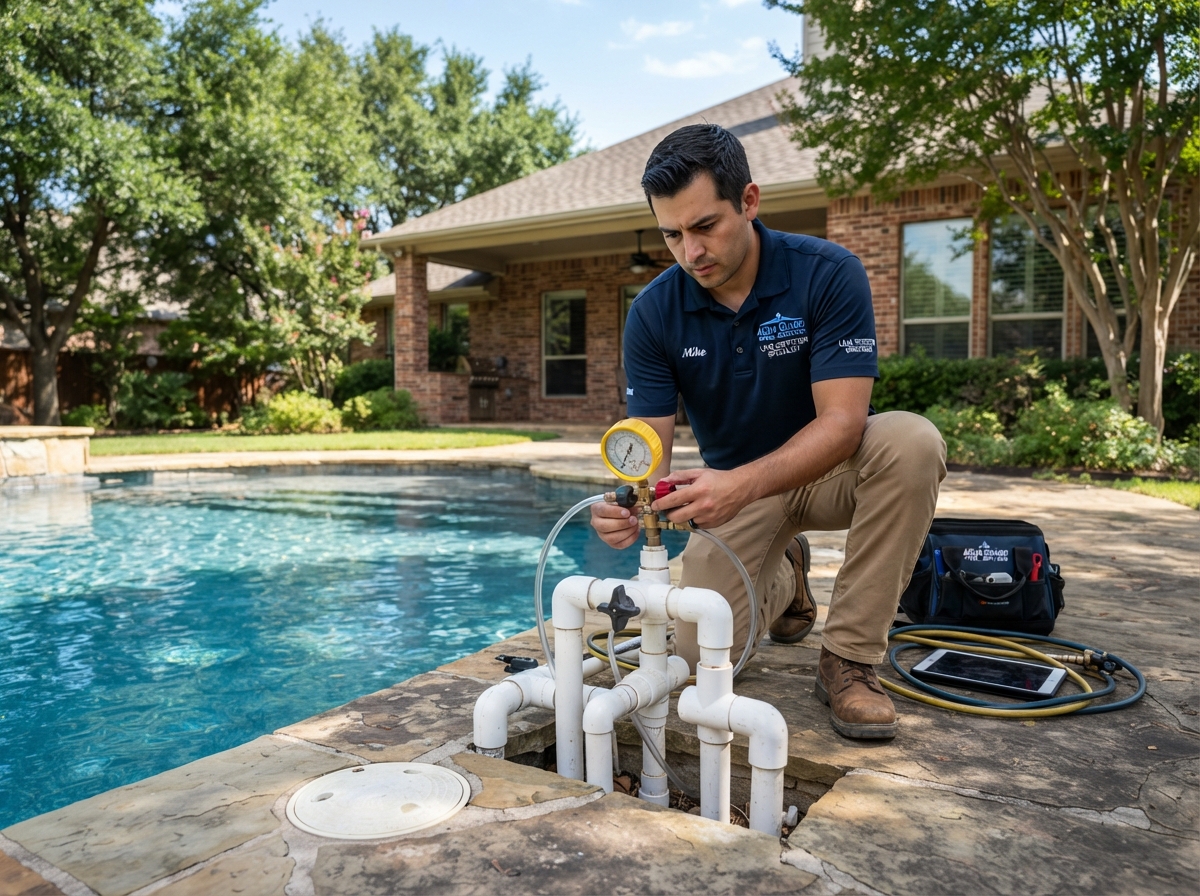
Losing water is normal in Texas heat — up to a point. Here's how to tell the difference between evaporation and a real leak, and what happens once you know.
Every pool loses some water to evaporation, especially in North Texas summers — so the first question isn't "is my pool losing water," it's "is it losing more than it should." Getting that wrong in either direction costs you: assume it's just evaporation and a real leak keeps draining money (and potentially damaging your yard or foundation), or assume the worst and pay for detection you didn't need.
### The Rough Baseline
Normal evaporation runs about 1/4 inch of water loss per day in typical North Texas conditions, more during extreme heat or wind. If you're consistently losing noticeably more than that, especially when it doesn't track with the weather, that's worth paying attention to.
### A Simple First Check
Fill a bucket with pool water, mark the water line inside the bucket and on the pool's edge, and set it on a step in the pool. Wait 24 hours. If the pool's water line has dropped more than the bucket's, you're likely losing water to something other than evaporation — the bucket evaporates at the same rate the pool does, so it isolates the difference.
### What Actual Signs Point to a Real Leak
Wet spots in the yard or under the deck near the pool, cracks in the deck itself, a pump that seems to be working harder than usual, or chemical costs going up because you keep having to rebalance after adding fresh water. Any one of these alongside water loss beyond the evaporation baseline is worth a professional look. Sometimes what looks like a leak is actually a chemistry imbalance causing cloudy or green water — if you're unsure, check our guide to pool water chemistry in North Texas to rule that out first.
### Why Detection Has to Come Before Repair
A leak can be in the structure, the plumbing, the equipment, or the liner — and each of those has a completely different fix, different cost, and sometimes a different answer to whether the pool needs to be drained at all. Professional leak detection uses actual equipment to find the source, not guesswork, which is why it's priced and handled as its own step before any repair estimate gets made. If you're weighing a salt system and wondering whether saltwater is harder on your plumbing, our breakdown of saltwater vs. chlorine for local homes covers the long-term tradeoffs.
### If You're Not Sure, That's Exactly What Detection Is For
You don't need to already know it's a leak before calling — if water loss looks off and the bucket test doesn't explain it, that's the right moment to get it checked before it becomes a bigger repair. And if you're buying a home with a pool, a leak found during a pre-purchase option-period inspection ties directly into this detection and repair process — catching it before you close is a lot cheaper than catching it after.
Serving Flower Mound and the surrounding North Texas area.