
Pool Safety Checklist: 10 Things to Check on Your Pool Fence
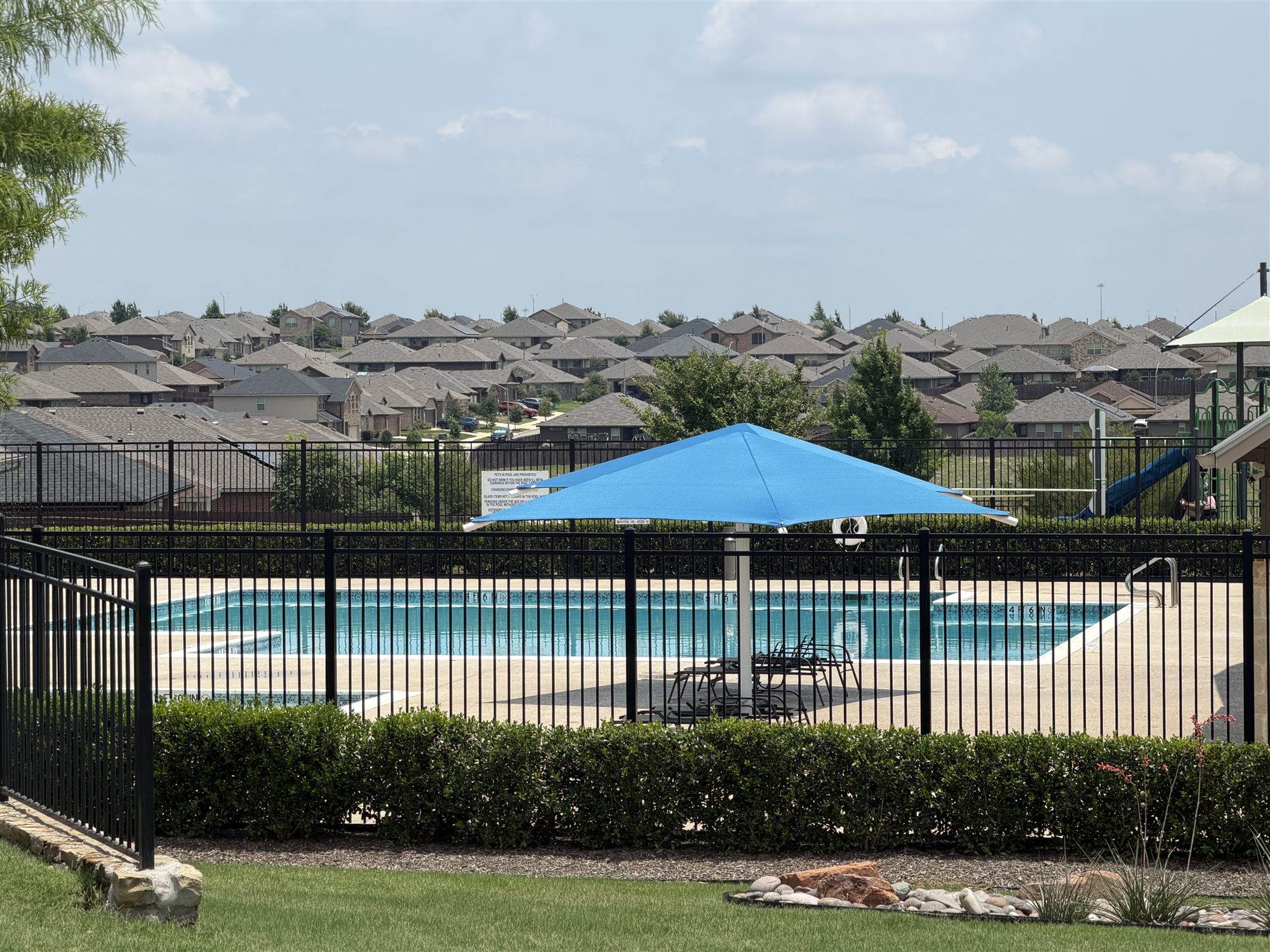
A 10-point check of your pool fence and gate, every figure from the International Swimming Pool and Spa Code Section 305.
You need a tape measure and about ten minutes.
Some of what follows drifts over time — a gate closer weakens, soil washes out from under a fence, an air conditioner gets installed. Some of it was never right to begin with and nobody measured. Both are worth finding.
Every figure below comes from the International Swimming Pool and Spa Code, Section 305. Your city adopts a particular edition of that code, and editions differ, so treat these as what to measure rather than a verdict. Where something does not match, it is worth a conversation — not an alarm.
Most people call it the pool fence. The code calls it a barrier, because the rules also cover walls, house doors and safety covers — so that is the word you will see below.
1. Open the gate, let go, and walk away
A gate that needs a push is not a barrier.
It must close and latch by itself, from any position you let it go from — including barely open, which is the position that fails first. Self-closing hinges weaken with heat and age, and a gate that latched reliably in May often does not by September.
Test it three times, releasing from a different point each time. Wide open, half open, and two inches from the frame.
ISPSC §305.3 — pedestrian gates shall be self-closing and self-latching
2. Check which way it swings
The gate must open outward, away from the pool.
A gate that swings inward can be pushed open by a child leaning on it. One that swings outward has to be pulled, which is a different and harder motion for a small child.
ISPSC §305.3
3. Measure the latch release from the ground
If you reach over the gate and operate the latch from outside, the release must be 54 inches or higher on a residential pool.
If the only release is on the pool side, it sits at least 3 inches below the top of the gate — and this is the part people miss — no opening within 18 inches of that latch may be more than half an inch wide. Otherwise a child reaches through the fence and works it from the other side.
Put your hand through the fence near the latch. If you can get a finger to it, so can they.
ISPSC §305.3.3 and §305.3.4
4. Measure the height from OUTSIDE the fence
48 inches minimum — measured on the side facing away from the pool.
This catches people out. A fence on a raised bed or a retained grade can measure a comfortable 48 inches from the pool deck and considerably less from the yard. The yard is the side a child climbs from, and it is the side the code measures.
Measure from the ground the child would stand on.
ISPSC §305.2.1
5. Walk three feet out and measure again
That 48 inches has to hold for three feet measured horizontally outward from the barrier.
So anything inside that three-foot band that a child can stand on defeats the fence, no matter how tall the fence is: a raised planter, a retaining wall, a woodpile, a stack of pavers, a bench, an air conditioning condenser, a rainwater barrel.
This is the item almost nobody checks, and it is usually something that arrived long after the fence did.
ISPSC §305.2.1
6. Look at the gap underneath
Measured on the away-from-pool side:
Over a solid surface like concrete — 4 inches maximum.
Over grass, gravel or soil — 2 inches maximum.
The smaller figure for soft ground is deliberate — a child can scrape out a gap that concrete would not allow, and so can a dog, and so can runoff.
Walk the whole perimeter, not just the gate. Erosion is local.
ISPSC §305.2.1
7. Measure between the horizontal rails — then the pickets
This is the one that surprises people, and it is worth doing carefully.
Measure the vertical distance between the tops of your horizontal rails.
45 inches or more apart — vertical pickets may be up to 4 inches apart.
Less than 45 inches apart — the rails themselves are a ladder, so the pickets must be no more than 1¾ inches apart, and the horizontals belong on the pool side.
Worked example, straight from the code body's own teaching material: a 48-inch fence with one rail 2 inches off the ground and another 3 inches below the top leaves 48 − 3 − 2 = 43 inches between the rails. That is under 45, so those pickets need to be under 1¾ inches apart. Ordinary 4-inch picket spacing fails that test, and the fence looks completely normal.
Decorative cutouts in the pickets count too — 1¾ inches maximum, whichever rule applies.
ISPSC §305.2.6 and §305.2.7
8. If it is chain link, measure the diamond
No opening greater than 1¾ inches.
Standard 2-inch chain link does not meet that on its own. Slats fastened top and bottom can bring the opening down, and with slats the same 1¾-inch limit applies.
Chain link is also the easiest fence in the world to climb, which the measurement does not capture. Worth knowing, even where it passes.
ISPSC §305.2.8
9. Look for anything that works as a foothold
Run your eye along the barrier from a child's height rather than yours.
Solid walls must have no indentations or protrusions that form handholds or footholds — normal construction tolerances and tooled masonry joints excepted. On any barrier, look for trellis, lattice, decorative ironwork, a tree limb, a downspout, cross-bracing, or a gate hinge wide enough to take a toe.
ISPSC §305.2.3
10. Measure from your equipment pad to the fence
Pool equipment outside the barrier must sit at least 36 inches back from it.
A pump and filter installed tight against the fence is a step, and the code treats it as one. So does a heater, and so does a pad extension added years after the fence went in.
This is in our own trade. Equipment pads get placed by pool companies, ours included, and this is the measurement that gets forgotten when a pad is extended for a new heater.
ISPSC §305.2.9
If your house forms part of the barrier
Most backyard pools are arranged this way, and the code treats it as a special case. Where a wall of the house is part of the barrier and a door or window opens onto the pool, you need one of:
An alarm on those doors, gates and any operable window with a sill under 48 inches above the indoor floor — listed and labelled as a water hazard entrance alarm to UL 2017, with the deactivation switch at 54 inches or higher.
A power safety cover listed to ASTM F1346.
Equivalent approved protection, such as self-closing, self-latching doors.
This is also the cheap answer if a fence is not affordable right now. An alarm is a fraction of the cost of fencing and can be fitted this week. It is not as good as a four-sided fence, and we will say so — but it is a recognised layer, and a recognised layer beats an intention.
ISPSC §305.4
If you have a removable mesh fence
Bottom must not lift more than 4 inches above the deck.
Inside of the fence, from the water — 20 inches minimum.
On an on-ground pool — not permitted on top of the structure.
A hinged gate in it — still has to meet everything in items 1-3.
ISPSC §305.2.5 and §305.2.5.1 — mesh fences comply with ASTM F2286
Two things this checklist is not
It is not an inspection, and finding everything on it in order does not mean a pool is safe. A barrier is one of five layers. Supervision, swimming ability, life jackets and knowing CPR are the other four, and no barrier substitutes for any of them. Our water safety page explains all five and points to the people locally who handle the four we do not.
It is not a code ruling. Your city adopts a particular edition of the ISPSC, and editions differ — Section 305.2.4, on screen enclosures, exists in the 2024 code and not in 2021. What is written above is what to measure. What your city enforces is what your city enforces.
If you would rather someone else measured it
Our Health and Safety Check is free. We will go through every item above, write down what we find, and tell you either way — whether or not there is any work in it for us.
469-835-5674
For the full barrier layer in detail — the measurements, the gate and latch requirements, and what we check — see our water safety page. And if you are buying a home with a pool, a pool inspection covers the barrier alongside the equipment, surfaces and water. In Texas, electrical work on pool equipment is licensed work — No Worries Pool Care holds TDLR RAIC #214, verifiable at tdlr.texas.gov.