
Does a Home Warranty Cover Your Pool? What the Cap Actually Means
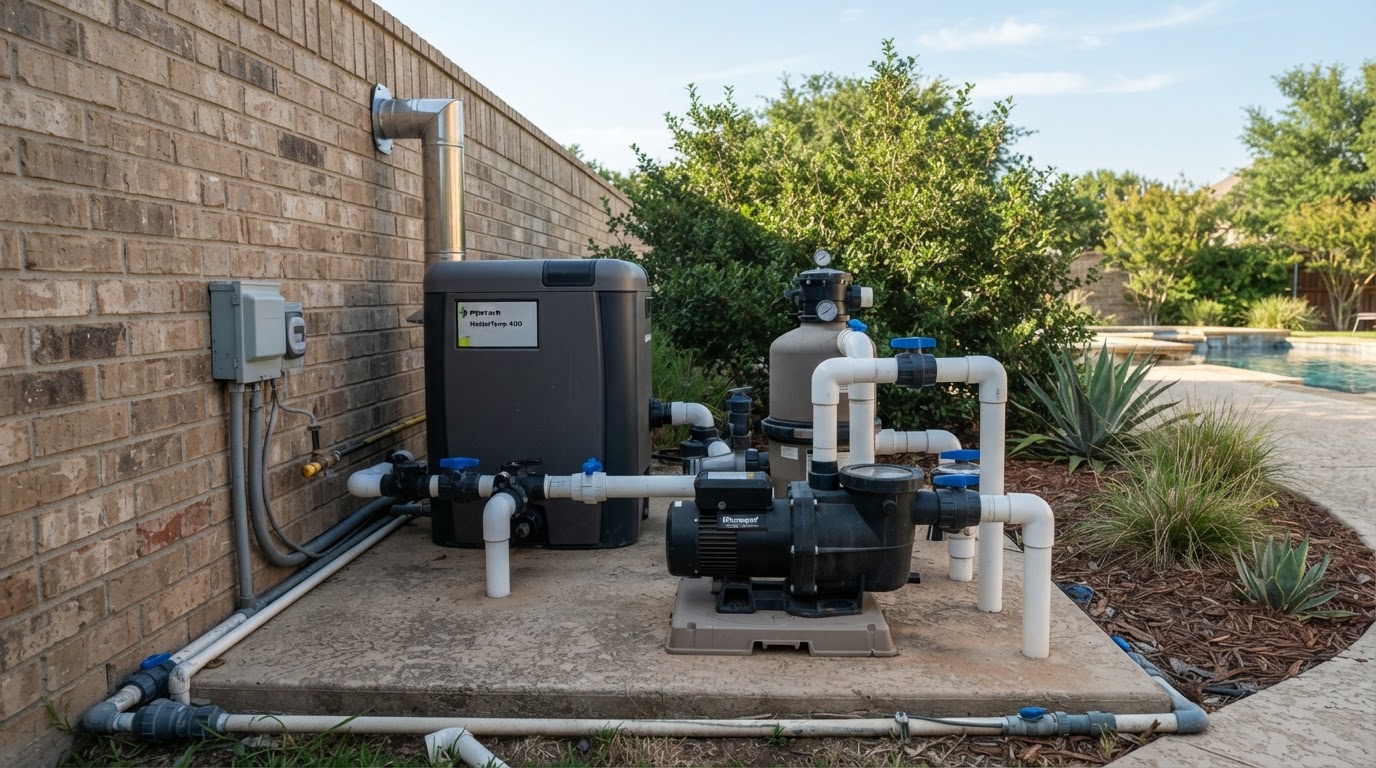
Pool coverage is an add-on with its own cap, usually a few hundred to about $3,000 a year. Why that cap exists, what it leaves out, and what salt pools change.
Home warranty pool coverage comes with its own cap, and across the major providers those caps run from a few hundred dollars a year up to about three thousand. A heater replacement in this market runs several thousand. Hold those two numbers next to each other and the shape of the product is already visible.
### What the Price Tells You About the Cap
Pool and spa is almost always an optional add-on rather than part of a base plan, roughly twenty to twenty-five dollars a month on top, with its own separate cap. A base plan covering the HVAC does not mean the pool is covered.
Here is the arithmetic, stated without accusation. A homeowner paying somewhere around seven hundred a year for the base plan and another twenty-odd a month for the pool is contributing roughly two hundred fifty to three hundred fifty dollars a year against the pool. A heater replacement in this market runs several thousand. For that add-on to fund one heater it would need fifteen years or more of premiums from that one customer with no other claim.
The cap is not a loophole or fine print anyone is hiding. It is what makes a three-hundred-dollar-a-year product possible at all. No one is selling a five-thousand-dollar heater for twenty-nine dollars a month, and the number on the page tells you that before you ever open the contract. This matters because it is the one thing here you can work out for yourself without reading a word of your policy. Providers like American Home Shield publish their own pool and spa terms, and it is worth checking the current contract for whichever plan you are considering, because terms change.
### The Cap Is Usually an Annual Total, Not a Limit per Item
That cap is usually an annual total rather than a limit per item. A single claim can use up the year. A heater in March means the pump in August is yours. It follows directly from the arithmetic above, and it is the part most worth knowing before you need it.
### And coverage usually does not start right away
Most plans carry a waiting or activation period after closing before anything is covered. That matters more than it sounds, because it lands exactly when a new owner is most exposed — the first weeks in the house, running equipment they have never run, finding out what they inherited. The window with no coverage is the same window where problems surface.
Activation terms have been getting stricter, and the length varies by plan, so the only number that matters is the one in the contract being considered. Check it before you count on it.
So there are three things to check, not one — what it excludes, what it caps at, and when it actually starts.
### Then the Exclusions Narrow It Further
Secondary to the arithmetic, but real: published plans commonly exclude a set of components rather than cover everything up to the cap. Commonly excluded: lights, liners, jets, fountains and waterfalls and their pumps, auxiliary pumps, pool covers, fill valves, cleaning equipment, heat pumps, and saltwater generators and components.
The North Texas point matters here. Most pools around here are salt — if you are weighing that decision, our breakdown of common salt pool myths is worth reading — so the component most likely to need replacing is frequently among the ones excluded. Some plans also set a lower sub-limit for saltwater equipment even where it is covered. The only list that governs you is the one in your own contract. We do not hold anyone's contract, and this post does not pretend otherwise. Providers like First American also publish their pool and spa add-on terms; check the current contract for whichever plan you are considering, because terms change.
### What to Check in Any Plan You Are Comparing
If you are shopping warranty companies right now and have not decided, here are the questions worth asking any provider, in order:
1. Is pool and spa included, or is it an add-on? 2. What is the cap, and is it annual or per claim? 3. Is it per item or aggregate? 4. Is the saltwater generator covered? 5. Is the heat pump covered? 6. Are lights covered? 7. What is the service fee per visit? 8. Who chooses the contractor?
We do not hold any provider's contract, so this checklist is the honest payoff of this post. It hands you the questions rather than pretending to know your answers. Use it even if you never contact us.
### What No Warranty Does
A warranty responds after a failure. Nothing in one tells an owner that a heater is near the end of its life. The seasonal point is concrete: finding a cracked heater in February means the part is ordered and the work done in a quiet month. Finding the same crack in June means waiting behind everyone else who just turned their pool on. Most owners find out something is wrong when it stops working. The earlier version of that moment is the one that costs less. For more on why catching equipment issues early matters, see our piece on who should be checking your equipment when you do the water yourself.
### So Keep the Warranty
None of this is an argument against having a warranty. Keep it, or buy it. It is an argument for knowing where it stops. A capped product is built for the four-hundred-dollar actuator and the nine-hundred-dollar pump motor, and it is genuinely worth having for those. It is not built for the catastrophe, and it was never priced to be.
### What Fills the Gap
Pool Watch is two professional equipment and safety inspections a year for owners who maintain their own pool, with readings recorded and compared visit to visit and a written report with photographs, from $29 a month. It does not pay for a heater either. What it does is tell you the heater is near the end while there is still time to plan — while it is still February, the part is still available, and the pool is not in use.
### If You Are Still Buying
If you have not closed yet, the pool is the part of the house a general home inspection covers least, and the option period is when to deal with it. A dedicated pool inspection documents the age and expected remaining life of every component before you own it, and our guide to the option-period inspection ties that into the real-estate timeline.
Last reviewed October 2026