
Pool Pump Not Working? Symptoms & When to Stop
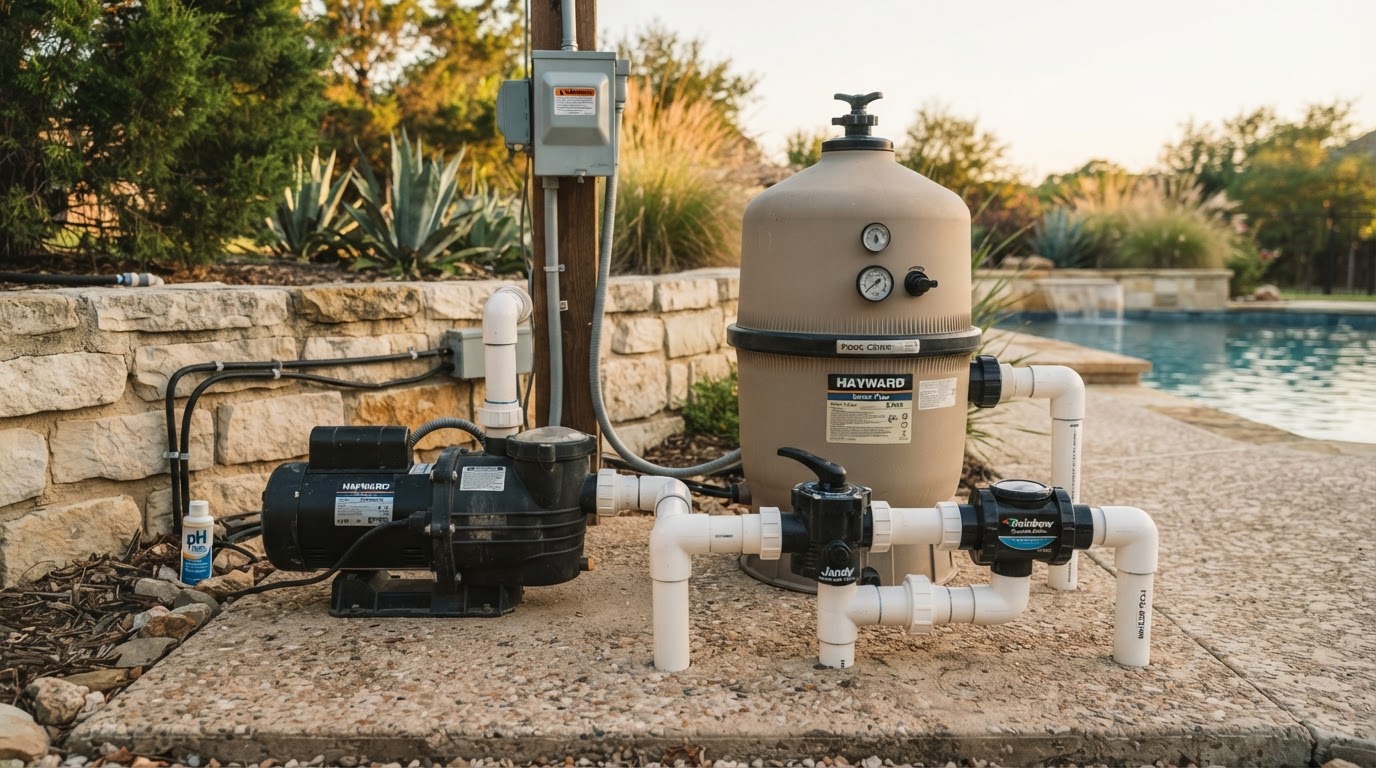
Pool pump not working? Each symptom explained — what it usually means, what you can safely check, and when to stop and call for repair.
Your pool pump just did something it does not normally do, and you are standing at the equipment pad with your phone. Here is what each symptom most likely means, what you can safely check yourself, and where the line is between a two-minute fix and a licensed repair.
### Pump won't turn on at all
The most likely cause is a tripped breaker or a timer that isn't sending power. Check your breaker box first — if the pool breaker is tripped, flip it off and back on. If it trips again immediately, stop.
What else it could be: a failed capacitor, a seized motor, or a loose connection at the timer or automation panel.
What you can safely check: the breaker position, the timer settings, and whether any GFCI outlets near the pad have tripped. If you have a mechanical timer, confirm the dial is turning.
When to stop: if the breaker trips again the moment you reset it, do not keep resetting it. A repeated trip means something is shorting, and that is electrical work. In Texas, electrical work on pool equipment is licensed work — No Worries Pool Care holds TDLR RAIC #214, verifiable at tdlr.texas.gov.
### Pump hums but doesn't spin
A hum with no rotation is almost always a failed start capacitor. The motor is getting power but cannot generate the torque to turn over.
What else it could be: a seized impeller (debris jammed in the pump), or a motor bearing that has seized from age or water intrusion.
What you can safely check: turn the power off at the breaker, then try to spin the motor shaft by hand through the fan cover opening on the back of the motor. If it turns freely, the impeller isn't jammed. If it won't budge, the motor may be seized.
When to stop: do not attempt to replace the capacitor yourself. A start capacitor can hold a dangerous electrical charge even after the power is disconnected at the breaker. That charge can cause serious injury, and discharging it safely requires the right tool and the right technique. This is the single clearest reason equipment work is a licensed trade and not a homeowner task. Call for pool equipment repair.
### Pump is loud, grinding, or screeching
A screeching or high-pitched whine is usually worn motor bearings. A grinding sound is more often a failing impeller or debris in the volute. A rattling sound can be cavitation — the pump is starved for water and pulling air. For a deeper look at pump noises, our guide on why your pool pump is making noise covers the common causes.
What else it could be: a loose mounting base, a vibrating pipe fitting, or a failing seal.
What you can safely check: confirm the water level is at the midpoint of the skimmer opening, empty the skimmer and pump baskets, and check that no valves upstream of the pump are partially closed. If the sound quietens after clearing the baskets, it was cavitation from a restriction.
When to stop: if the sound persists after the baskets are clean and the water level is correct, the motor bearings are likely failing. Running a pump with bad bearings will eventually seize the motor, and the heat can damage the shaft and seal. Our Pool Watch maintenance program catches bearing wear on quarterly equipment inspections before it reaches that point. Call for service.
### Pump won't prime or keeps losing prime
Loss of prime means the pump is pulling air instead of water. The most common cause is a low water level in the pool or a skimmer basket that is full and blocking flow.
What else it could be: a loose pump lid, a worn lid o-ring letting air in, a suction-side leak in the plumbing, or a failing valve.
What you can safely check: check the water level — it should sit at the middle of the skimmer opening, not below it. Empty the skimmer and pump baskets. Remove the pump lid, inspect the o-ring for cracks or flat spots, lubricate it with a silicone o-ring lubricant if you have one, and reseat the lid squarely. If your pump has a sight glass, watch for air bubbles collecting in the basket.
When to stop: if the pump primes but loses prime again within minutes, you have a suction-side air leak that requires diagnosis. If the pump runs dry for more than a minute or two trying to prime, turn it off — running dry will damage the seal and impeller.
### Pump is leaking water
Water from under the pump is most often a failed shaft seal. The shaft seal sits where the motor shaft enters the pump housing, and it wears from age, heat, and water chemistry.
What else it could be: a cracked pump housing, a loose drain plug, a failed lid o-ring, or a leak at the plumbing connection.
What you can safely check: look at where the water is coming from. If it is dripping from the drain plug at the base, tighten it by hand. If it is coming from the lid area, check the o-ring. If it is from where the motor meets the pump body, that is the shaft seal.
When to stop: a shaft seal replacement requires opening the pump, pulling the impeller, and reseating the new seal — work that needs the housing opened and resealed correctly. North Texas water is hard, and mineral buildup accelerates seal wear, so this is a common repair in our area. Most shaft seals are replaceable without a new pump. Call for pool equipment repair.
### Pump housing or lid is cracked
A crack in the pump housing or lid in North Texas is usually freeze damage. Water left inside the pump over a hard freeze expands, splits the plastic, and the crack shows up the first time the pump runs afterwards — often leaking or spraying at the split.
What else it could be: age and UV degradation of the housing, or an over-tightened lid that has stressed the threads.
What you can safely check: visually inspect the housing and lid for visible cracks. If the pump is leaking from a crack in the body, that component needs replacement.
When to stop: a cracked housing cannot be reliably repaired with sealant — it is under pressure and the crack will spread. If your pump housing cracked after a freeze, it is worth reading our guide on how to prepare your pool for a Texas freeze before the next one. The housing or lid is a replaceable part; you do not necessarily need a whole new pump. Call for service.
### Pump runs then shuts off by itself
A pump that starts, runs for a few minutes, then shuts down is usually tripping on thermal overload. The motor is overheating and its internal protection is cutting power to prevent damage.
What else it could be: a failing capacitor, low voltage at the motor, or a motor that is drawing too many amps because of bearing wear or an impeller restriction.
What you can safely check: feel the motor after it shuts off — if it is too hot to touch, it is overheating. Check that the vents on the back of the motor are not blocked by debris or vegetation. Clear any airflow obstruction.
When to stop: if the pump continues to overheat after clearing the vents, the motor is likely failing internally. Repeated thermal trips will shorten the motor's life. This is the kind of gradual failure that shows up as a trend in amp readings over time — which is why we record them. Call for diagnosis.
### Weak flow from the returns
Weak return flow usually means something is restricting the water path — a full filter, a clogged basket, or a partially closed valve.
What else it could be: a worn impeller, a pump that is running at a lower speed than usual (if you have a variable-speed pump), or a suction-side blockage in the plumbing.
What you can safely check: empty the skimmer and pump baskets. Check your filter pressure gauge — if it reads 8 to 10 PSI above its normal clean baseline, the filter needs backwashing or cleaning. Confirm all valves are fully open. If you have a variable-speed pump, check that the speed setting has not been changed.
When to stop: if the flow does not improve after clearing the baskets and cleaning the filter, the restriction is deeper in the system — a worn impeller, a partial blockage in the plumbing, or a pump that is no longer moving enough water. That needs diagnosis. If the pump itself is worn and a higher-capacity replacement makes sense, our pool equipment upgrade options include variable-speed pumps that cost less to run. If you are weighing repair versus replacement, our comparison of variable-speed vs. single-speed pumps walks through the long-term cost difference.
### Air bubbles in the pump basket or returns
Air in the pump basket means the pump is pulling air in on the suction side. The most common cause is a loose pump lid or a worn lid o-ring.
What else it could be: a low water level, a suction-side plumbing leak, or a failing valve that is letting air in.
What you can safely check: check the water level, empty the baskets, remove and reseat the pump lid, and inspect the o-ring. If the pump basket has a sight glass, watch whether air clears after you reseat the lid.
When to stop: if air persists after reseating the lid and confirming the water level, you have a suction-side air leak that needs professional diagnosis. Air in the returns can also indicate a low water level or a compromised plumbing connection.
### Timer or automation isn't starting the pump
If the pump does not come on at its scheduled time, the issue is usually in the timer or automation system, not the pump itself. A mechanical timer may have stopped turning, or a digital automation controller may have lost its schedule or its power.
What else it could be: a tripped GFCI, a failed relay in the control panel, or a loose wire connection.
What you can safely check: confirm the breaker is on. If you have a mechanical timer, check that the dial is still turning and the time is correct. If you have a digital controller, check for error codes on the display and confirm it has power.
When to stop: if the timer or automation controller is not functioning, the wiring and relay work behind it is electrical. Pool automation systems from manufacturers like Pentair, Hayward, and Jandy — the three brands we service — all require licensed electrical work for diagnosis and repair. Call for service.
### Most pumps are repairable
A failed capacitor, a worn shaft seal, a bad bearing, or a cracked impeller does not mean you need a new pump. Most pump problems are component-level repairs, and the pump housing itself often outlasts two or three motors. The reason most owners expect to hear "you need a new pump" is that the person telling them is selling pumps, not repairing them. If it is your heater giving trouble instead, our companion guide to pool heater error codes and what to check covers the same ground for the other half of your equipment pad.
### If you want us to look at it
A flat $125 diagnostic fee, credited in full toward any repair we carry out. We diagnose, tell you what we found, and you decide. Phone 469-835-5674, or reach us through our contact page.
Serving Flower Mound, Highland Village, Argyle, Lewisville, Bartonville, Double Oak, Lantana, Northlake and Copper Canyon.