
New Pool Owner? Here's What You Actually Need to Know (Before You Panic)
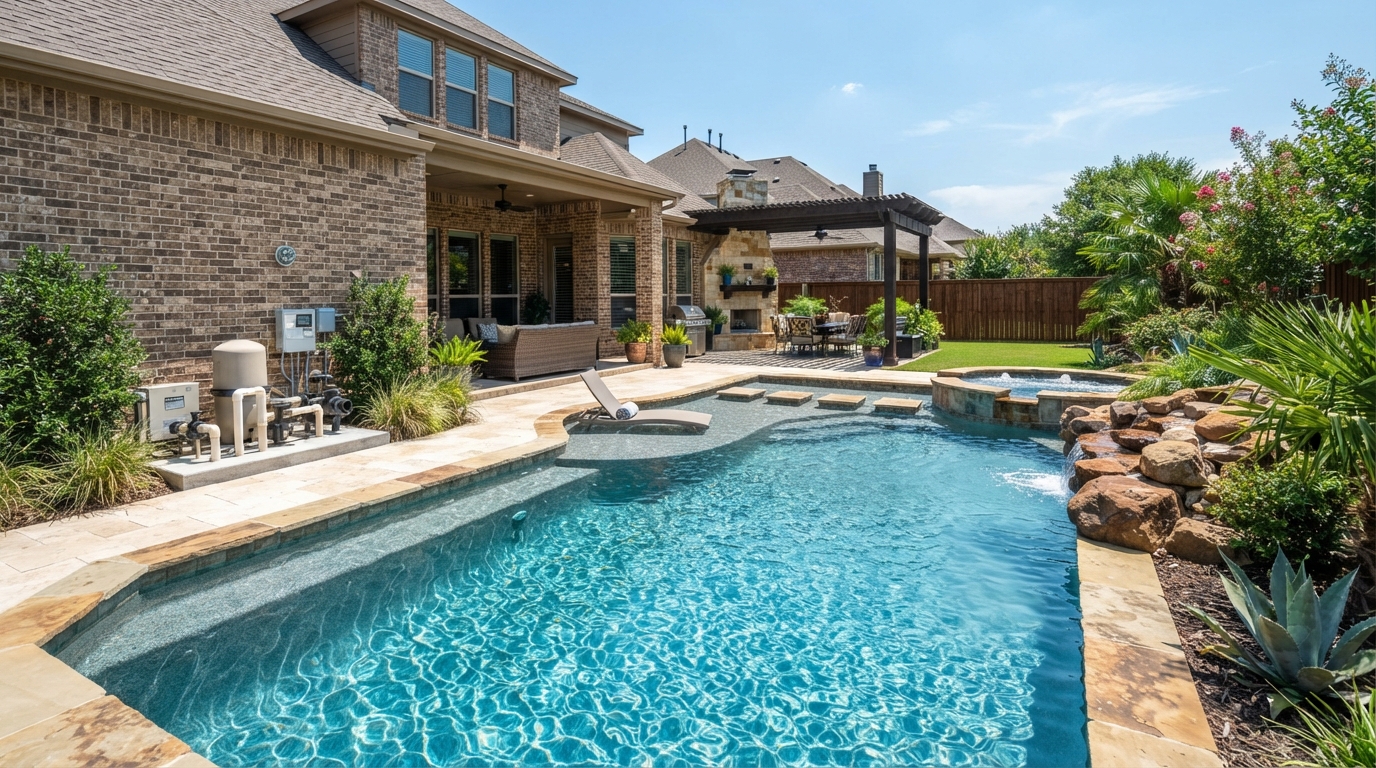
Just bought a home with a pool, or heading into your first Texas summer as an owner? Here's the real, no-fluff guide to water chemistry, equipment, and whether DIY or a pro session makes sense.
So you've got a pool now. Maybe it came with the house. Maybe you finally installed the one you'd been dreaming about. Either way, there's a good chance nobody handed you an instruction manual, and the internet's advice ranges from genuinely useful to questionable.
Here's the real rundown: what new owners actually need to know, what's worth learning yourself, and where a second set of hands makes the whole thing a lot less stressful.
### First Things First: What to Do in Your First Week
If you just closed on a house with a pool, or the installer just left, don't touch the chemicals yet. Find the equipment pad (pump, filter, automation panel if you have one) and photograph the model numbers. Ask the seller or builder for maintenance records if you can get them. Get a real water test, not just a strip from a big-box store. And don't assume the pool is fine just because the water looks clear—clarity and chemical balance aren't the same thing. Most new owners feel behind for the first few weeks. That's normal, and the learning curve flattens out fast. (If you're wondering where to start, read our step-by-step guide for new pool home buyers.)
### Water Chemistry, in Plain English
You need to understand four main metrics: 1. **Chlorine (or Salt):** Chlorine is your primary sanitizer. If you have a salt system, it simply generates chlorine automatically via an electrolytic cell rather than using manual additions—see our breakdown of saltwater vs. chlorine for Flower Mound homes. 2. **pH:** Measures how acidic or basic the water is, affecting skin comfort and equipment longevity. For official public health chemical safety guidelines, consult the CDC's Pool Chemical Safety guide. 3. **Alkalinity:** Acts as a buffer for pH. Low alkalinity is usually the real root cause when your pH swings wildly and nothing you add seems to stick. 4. **Stabilizer (Cyanuric Acid):** Protects your chlorine from breaking down under intense Texas UV rays. For a deep dive, check out our ultimate guide to pool water chemistry.
*Pro tip:* Early algae often looks like a dull, cloudy tint or a faint color change in low-circulation corners (steps, behind ladders) before it's obvious anywhere else.
### Understanding Your Equipment Without Becoming a Technician
Your pump's run schedule matters—most residential pools need full circulation roughly once a day, typically 6-10 hours depending on pump size and pool volume. Filter cleaning and backwash signals include rising pressure gauge readings and weaker return jets. Your automation panel, if you have one, controls schedules and chlorination output; a lot of owners never touch theirs simply because nobody walked them through it.
Also, if you're heading into a Texas pool season, opening and freeze preparation both come with their own checklist, and getting either wrong is one of the more common ways a new owner ends up with an expensive surprise—read how to prepare your pool for a Texas freeze.
### Should You DIY This, or Have Someone Show You?
Plenty of owners successfully DIY long-term. Plenty of others get burned by an algae bloom or chemical mishap first. The difference usually isn't effort, it's that generic advice can only tell you what's typically true, not what's true for your specific pump, filter, and water. The real question isn't DIY-forever vs. professional-forever, it's whether you want to spend your first season learning by trial and error, or start with someone walking you through your specific setup.
### What a Pool School Session Actually Covers
A private, 1-on-1, in-home session (not a sales visit) where a technician walks you through your exact system, pump, filter, automation panel, plus hands-on water chemistry basics specific to your pool. Capped at an hour, flat $150. Built for first-time owners, anyone who inherited a pool with a home purchase, or anyone who wants a confidence-building refresher. You can learn more or book on our dedicated Pool School training page.
If a home warranty came with the house, what its pool coverage does and does not cover is worth ten minutes of your time this week.
Serving Flower Mound, Lewisville, and the surrounding North Texas service area.